by Chris Whitehead
Share

The Headache That Wouldn't Go Away
That changed one Monday morning when she woke up with a dull ache behind
her right eye.
lights became unbearable, sounds seemed unusually loud, and even strong
smells made her nauseated.
Earlier that morning, Emily had also noticed shimmering zigzag lines
across part of her vision. At the time, she assumed she was simply tired.
She took acetaminophen, but several hours later the headache continued
to worsen.
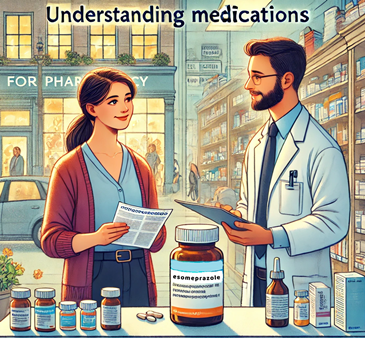
On her way home, Emily stopped at her neighborhood pharmacy and stared
at the shelves filled with headache remedies.
A pharmacist nearby overheard her and offered to help.
After asking about the location of the pain, nausea, sensitivity to
light, and her visual symptoms, the pharmacist explained that Emily's
symptoms sounded much more like a migraine than a typical headache.
the pharmacist explained. "Not everyone with migraines experiences one,
but it can occur before the headache begins."
The pharmacist explained that migraines involve neurological pain
pathways and inflammatory mediators, which helps explain why symptoms
can include much more than head pain.
Acetaminophen or NSAIDs may help some patients when taken early in a
migraine attack. For moderate to severe migraines, prescription
medications such as triptans may be appropriate.
The pharmacist also asked Emily how frequently she had been taking pain
medication.
The pharmacist explained that using acute headache medications too
frequently may contribute to medication-overuse headaches.
Emily was surprised. She had assumed that taking more medication would
always mean better headache control.
The pharmacist recommended that Emily discuss her recurrent headaches
with her healthcare provider rather than continuing to rely solely on
over-the-counter medications.
Her physician later confirmed that she was experiencing migraine with
aura and prescribed sumatriptan to use when an attack began.
A serotonin 5-HT1B/1D receptor agonist that helps interrupt migraine
pathways and reduce the release of inflammatory neuropeptides.
Over the next several months, Emily learned to recognize the early signs
of her migraines and treat them promptly.
A few weeks later, Emily returned to the pharmacy.
the headache aisle."
The pharmacist smiled.
💊 Pharmacy Pearl
Many patients self-treat migraines with over-the-counter pain relievers
without realizing they may benefit from migraine-specific therapy.
Pharmacists and pharmacy technicians can help identify migraine symptoms,
recognize medication overuse, review medication safety, and refer patients
for evaluation when headaches are severe, frequent, unusual, or associated
with concerning neurological symptoms.
Medications for Migraine Headaches
A Pharmacist's Guide to Acute and Preventive Therapy
Migraines affect millions of Americans and are among the leading causes of disability worldwide. Unlike a typical headache, a migraine is a complex neurological disorder that can significantly interfere with work, school, and everyday activities. Patients often describe migraines as debilitating, with symptoms that extend far beyond head pain.
Pharmacists and pharmacy technicians play a vital role in helping patients choose appropriate over-the-counter (OTC) medications, educating them about prescription therapies, identifying medication overuse, and recognizing when referral to a healthcare provider is warranted.
This guide reviews the causes of migraines, commonly prescribed medications, mechanisms of action, dosing, side effects, and counseling points that every pharmacy professional should know.
What Is a Migraine?
A migraine is a neurological condition characterized by recurrent attacks of moderate to severe headache that often occur on one side of the head. Pain is usually described as throbbing or pulsating and may last from 4 to 72 hours if left untreated.
Unlike tension headaches, migraines frequently occur with additional symptoms, including:
- Nausea
- Vomiting
- Sensitivity to light (photophobia)
- Sensitivity to sound (phonophobia)
- Sensitivity to odors
- Blurred vision
- Difficulty concentrating
- Fatigue
Some patients experience an aura before or during a migraine. An aura may include flashing lights, zigzag lines, blind spots, numbness, tingling, or temporary speech disturbances.
What Causes Migraines?
Migraine attacks involve activation of neurological pain pathways, including the trigeminal system and signaling involving calcitonin gene-related peptide (CGRP). CGRP and other mediators contribute to pain transmission and neurogenic inflammation.
Common Migraine Triggers
- Stress
- Lack of sleep
- Hormonal changes
- Bright lights
- Strong odors
- Weather changes
- Alcohol
- Certain foods
- Caffeine withdrawal
- Skipping meals
- Dehydration
Identifying individual triggers can help some patients reduce the frequency or severity of migraine attacks.
Goals of Migraine Therapy
Acute (Abortive) Therapy
- Stop or reduce a migraine once it begins
- Relieve pain quickly
- Reduce associated symptoms
- Restore normal function
Preventive (Prophylactic) Therapy
- Reduce migraine frequency
- Decrease severity
- Improve quality of life
- Reduce reliance on acute medications
Commonly Used Acute Medications
Acetaminophen (Tylenol)
Acetaminophen acts primarily within the central nervous system to reduce pain and fever.
Adult Dose
- 500–1,000 mg every 4–6 hours as needed
- Follow product-specific maximum daily dosing recommendations
Common / Important Side Effects
- Nausea
- Rare skin reactions
- Hepatotoxicity with excessive dosing
Many OTC cold, flu, sleep, and combination pain products also contain acetaminophen. Patients should check ingredient labels carefully to avoid accidental duplicate dosing.
Ibuprofen (Advil, Motrin)
Ibuprofen is a nonsteroidal anti-inflammatory drug (NSAID) that inhibits cyclooxygenase enzymes, reducing prostaglandin production.
Adult Dose
- 200–400 mg every 4–6 hours as needed
- Maximum OTC dose: 1,200 mg/day
- Higher doses may be prescribed under medical supervision
Common / Important Side Effects
- Stomach irritation
- Heartburn
- GI bleeding
- Kidney injury
- Elevated blood pressure
Taking ibuprofen with food may reduce stomach upset. Patients with kidney disease, cardiovascular disease, a history of GI bleeding, or those taking anticoagulants should discuss NSAID use with a healthcare professional.
Naproxen (Aleve)
Naproxen is an NSAID that reduces prostaglandin production and provides a relatively long duration of analgesic and anti-inflammatory activity.
Adult OTC Dose
- 220 mg every 8–12 hours as needed
- Maximum OTC dose: 660 mg/day
Common / Important Side Effects
- Dyspepsia
- GI bleeding
- Kidney impairment
Triptans
Triptans are migraine-specific prescription medications commonly used for acute treatment of moderate to severe migraine attacks.
Sumatriptan (Imitrex)
Selective serotonin 5-HT1B/1D receptor agonist that reduces trigeminal signaling, inhibits release of CGRP and other neuropeptides, and produces cranial vasoconstriction.
Adult Oral Dose
- 25–100 mg orally at migraine onset
- May repeat after at least 2 hours if needed
- Maximum oral dose: 200 mg/day
Available Forms:
- Tablets
- Nasal formulations
- Subcutaneous injection
Common Side Effects
- Tingling
- Warm or flushing sensation
- Pressure or tightness sensations
- Dizziness
- Fatigue
Triptans generally work best when taken early during the headache phase of a migraine attack.
⚠ Important Safety ConsiderationsTriptans are not appropriate for every patient. Cardiovascular and cerebrovascular history, blood pressure, other medications, and migraine subtype should be evaluated before therapy.
Rizatriptan (Maxalt)
Adult Dose
- 5–10 mg at migraine onset
- May repeat after at least 2 hours
- Maximum: 30 mg/day for most adults
Adverse effects are generally similar to those seen with other triptans.
CGRP Receptor Antagonists (Gepants)
Gepants block calcitonin gene-related peptide signaling, an important pathway in migraine development. Unlike triptans, gepants do not produce vasoconstriction.
Ubrogepant (Ubrelvy)
CGRP receptor antagonist used for acute migraine treatment.
Adult Dose
- 50 or 100 mg at migraine onset
- A second dose may be taken at least 2 hours later when appropriate
- Maximum: 200 mg within 24 hours
Common Side Effects
- Nausea
- Somnolence
- Dry mouth may occur
Gepants may provide an alternative for some patients who cannot use or do not respond adequately to triptans.
Migraine Prevention Medications
Preventive treatment may be considered when migraine attacks are frequent, disabling, prolonged, or inadequately controlled with acute therapy. The decision is individualized based on attack frequency, severity, patient preference, and comorbidities.
Propranolol
A nonselective beta-adrenergic blocker that modifies adrenergic and neuronal pathways involved in migraine prevention.
Dosing is individualized and titrated according to response and tolerability.
Common Side Effects
- Fatigue
- Bradycardia
- Dizziness
- Reduced exercise tolerance
Topiramate (Topamax)
An anticonvulsant that affects several neuronal pathways involved in excitability and migraine prevention.
Usually started at a low dose and gradually titrated. A common migraine-prevention target is 50 mg twice daily.
Common / Important Side Effects
- Tingling or paresthesia
- Weight loss
- Difficulty concentrating
- Kidney stones
Encourage adequate hydration. Patients should also be counseled about cognitive effects and other important precautions associated with topiramate.
CGRP Monoclonal Antibodies
Examples include:
- Erenumab (Aimovig)
- Fremanezumab (Ajovy)
- Galcanezumab (Emgality)
These monoclonal antibodies target CGRP or the CGRP receptor, reducing migraine signaling and helping prevent future attacks.
Dosing varies by product and may be monthly or quarterly.
Common Side Effects
- Injection-site reactions
- Constipation with some agents
- Other product-specific adverse effects
Medication-Overuse Headache
One of the most important counseling opportunities in community pharmacy is recognizing medication-overuse headache (MOH).
Frequent use of acute headache medications such as:
- Acetaminophen
- NSAIDs
- Triptans
- Combination headache products
may contribute to increasingly frequent headaches in susceptible patients.
Patients repeatedly purchasing acute headache medications or using them on many days each month should be referred to the pharmacist or healthcare provider for evaluation. Medication-overuse thresholds vary by drug class.
When Should Patients See a Healthcare Provider?
Patients should seek medical evaluation for headaches that are new, unusual, progressively worsening, or associated with concerning symptoms.
Seek Prompt Medical Attention For:
- Sudden, severe or "worst headache of my life"
- Headache following significant head trauma
- Fever with stiff neck
- Confusion or altered consciousness
- New weakness or numbness
- Sudden vision loss
- A new or significantly changed headache pattern later in life
- Frequent migraines despite treatment
- Other new or concerning neurological symptoms
Pharmacy Technician Counseling Tips
Pharmacy technicians frequently interact with patients seeking headache relief and can play an important role in identifying situations requiring pharmacist intervention.
- Ask whether the patient has previously been diagnosed with migraines.
- Encourage patients to mention nausea, visual changes, or sensitivity to light and sound.
- Watch for frequent purchases that may suggest medication overuse.
- Check for duplicate acetaminophen or NSAID ingredients in combination products.
- Refer patients with severe, recurrent, unusual, or changing headaches to the pharmacist.
- Encourage hydration, regular meals, consistent sleep, and identification of personal migraine triggers.
💊 Clinical Pearl
Not every headache is a migraine, and not every migraine requires the same treatment. Patients with frequent migraines, significant disability, or inadequate relief from OTC medications may benefit from migraine-specific acute therapy or preventive treatment.
By understanding migraine medications, their mechanisms of action, dosing, side effects, and counseling points, pharmacists and pharmacy technicians can help identify appropriate therapy, prevent medication-related problems, and improve the lives of patients living with migraines.
```